Homel Blog QR code: superficial or game-changer?
Adopting QR Codes in Restaurants: A Simple Tech Upgrade or a True Operational Game-Changer?
Share this article
In this article
- What QR Codes Actually Do
- Operational Efficiency & Customer Experience
- Impact on Sales & Profitability
- Limitations
- Yes or no?
The QR Code Is No Longer a Gadget
The QR Code (Quick Response) was invented in 1994 for logistics management in the automotive industry. However, it was only with the rise of smartphones that it truly found its purpose. In the restaurant industry, its adoption accelerated significantly during the COVID crisis and the rise of “contactless” guidelines.
Today, QR codes are widely adopted: according to recent studies, over 70% of restaurants worldwide have integrated them in one way or another into their offering¹ — digital menus, ordering, payment, and more. What started as a “crisis tool” has now become a standard component of both the customer experience and internal operations.
In short, QR codes are no longer just a tech gimmick. But does that make them a real structural lever — sustainable, profitable, and efficient — for restaurants?
What QR Codes Actually Do for you
Obvious or not, a quick reminder never hurts:
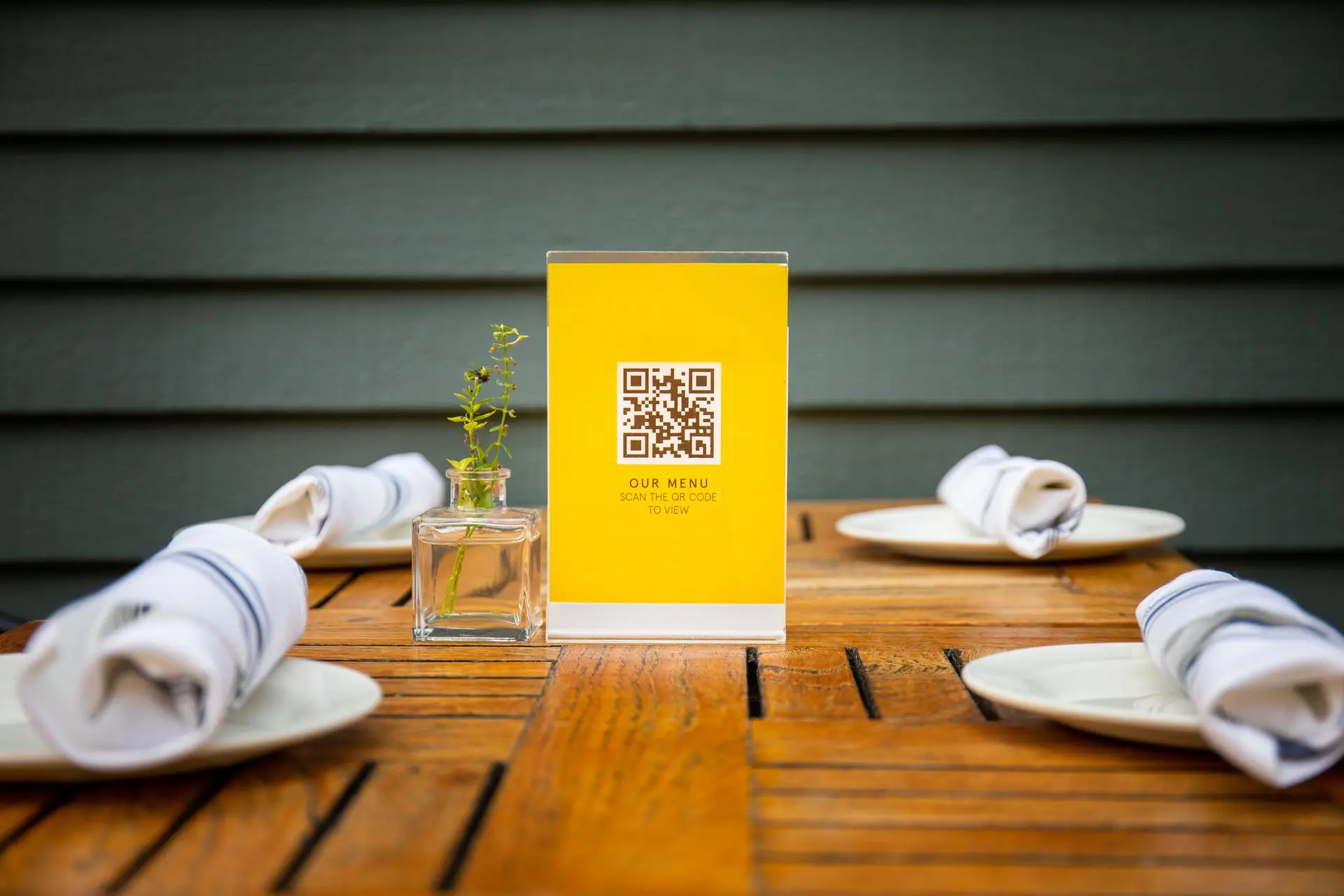
Instant Access to a Digital Menu
A QR code gives customers direct access to the menu on their smartphone. This eliminates the need to print paper menus with every change, reduces costs, and simplifies updates. Fish of the day price change? Updated in a few clicks. An item out of stock? Removed instantly.
Ordering from the Table
After browsing the menu and making their choice, customers can place their order directly — without waiting for a server. Orders go straight to the kitchen or bar. Fewer mistakes, faster service, better flow management.
Payment
When it’s time to pay, the QR code (or QR + payment solution) allows customers to settle the bill directly from their phone. No terminal, no waiting. This speeds up table turnover and improves the end-of-meal experience.
Takeaway or Delivery Orders
A visible QR code (on the window, flyers, vehicles, or website) can redirect customers to an online ordering module, making takeaway and delivery more accessible.
Table Reservations
Just like takeaway orders, QR codes can redirect customers straight to your table reservation system.
Loyalty Program Sign-Ups
QR codes can also be used to invite customers to join your digital loyalty program.
Social Media & Newsletter
You can use QR codes to encourage customers to follow you on social media — for example by adding a small QR card with the bill. You can also invite them to subscribe to your newsletter.
Toward Real Structural Gains: Operational Efficiency & Customer Experience
Operational Efficiency
- Less time spent printing or reprinting paper menus
- Fewer ordering errors: everything is digital, reducing human error
- Time savings for staff: no need to hand out menus, take orders manually, or manage cash/card payments. Staff can focus on welcoming guests, advising, and service
- Faster service overall: from ordering to payment, the entire cycle becomes smoother. Faster table turnover — meaning more covers per service. Some data points to time savings of around 15 minutes per service, which can represent up to +30% table turnover².
A Modernized Customer Experience
- nstant access to menus, descriptions, allergens, and availability: more transparency and comfort
- Autonomy: customers can browse, order, and pay when they want — without waiting
- Speed and fluidity, especially during peak hours
- A strong sense of modernity and convenience, increasingly expected by connected customers
At this stage, this is no longer a cosmetic improvement: QR codes fundamentally change how service is delivered, how operations are organized, and how the customer experience is designed.
Impact on Sales & Profitability?
Clearly, QR codes are not just a “nice-to-have.” When properly integrated, they become a real driver of sales and profitability. We see it with our customers — and many others report the same results:
- Nearly 70% of restaurants worldwide use QR codes in some form. Lorsqu'il est utilisé pour un menu digital, l'engagement client peut-être boosté de 40%. When used for digital menus, customer engagement can increase by up to 40%.
- Almost one third of French consumers prefer a digital menu over a paper one — as long as it’s clear and up to date.
- 58% of consumers appreciate the option to pay via QR code in restaurants or retail.
- Studies estimate that with a complete digital offer (menu, ordering, payment), average spend per customer can increase by around 20%
- Thanks to faster table turnover, upselling through smart suggestions (drinks, extras, desserts, etc.), and improved accessibility, QR codes can become a true revenue lever for restaurants that are well structured for digital operations..
QR Codes… Yes, But
As attractive as it sounds, QR codes are not suitable for every context and do come with limitations:
- Less tech-savvy customers: older audiences or resistant guests may be reluctant to use smartphones for ordering or payment
- Your concept matters: fine dining or traditional concepts often rely on rituals, human interaction, materials, and atmosphere. In such cases, QR codes may conflict with expectations of exclusivity or authenticity.
- Houston, we have a problem: smartphone issues, internet connection, battery life… a small technical hiccup can disrupt the experience. A simple backup plan is always a good idea!
- It has to work smoothly: digitizing the entire flow and integrating multiple services requires real expertise. Good news: at Restomax, that’s exactly our specialty. Our ecosystem integrates all the key digital features for ordering and customer experience in restaurants. No waste, no frustration — just a short team training (and yes, we take care of that too)
notre écosystème intègre toutes les fonctionnalités de digitalisation de la commande et de l'expérience client en restauration. Pas de gâchis, pas de frustration... juste une petite formation de vos équipes (et ça aussi, on s'en occupe!).
So… Should You Go for It?
Adopting QR codes in restaurants isn’t about following a trend — it’s about preparing for the future of service, operations, and customer relationships.
When properly implemented, QR codes can unlock their full potential: productivity gains, improved customer experience, higher average spend, better table turnover, increased visibility and accessibility — and more.
Of course, it’s not a universal solution. Everything depends on your concept, your clientele, your positioning, and the atmosphere you want to convey.
But when well thought out, QR codes become a strategic tool — a digital building block that can sustainably structure how you serve, sell, and retain customers. For a modern restaurant, it may well be one of the smartest moves you can make.
Sources: